About Me

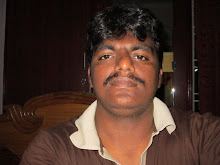
My photo
This's vivek studying M.Tech Computer science.

Live scorecard

Google Search

Custom Search

Google results

Currency converter

Mobile Services

Tuesday, February 26, 2008

Late night studying could upset body clock

Tens of thousands of students across the country are burning the midnight oil for their board examinations barely a week away. But they should watch out for their health.

Studying through the night and waking up late in the morning may not be a good idea. The body clock may refuse to adjust when the examinations dawn, making students groggy and tired when they need to be alert and focussed.

Several students stay awake at night because they can study undisturbed for hours with just their table lamp for company. But they don’t realise that the will have to be up and about for the 10.30 a.m.-1.30 p.m. examination schedule beginning March 1.

Manan Gupta, a Class 12 student, studies till 4 a.m. every day and sleeps till noon the next day during the ongoing study break. He finds that his concentration level is at its best at night.

“I am able to cram my social studies lessons very well at night. My younger brother cannot disturb me, and my friends also do not call up. So, I study - with a small break to play on the computer - till I tire at around 4 a.m.”

Another reason for Manan to stay up at the night are his taxing coaching school schedules - three-four hours daily with maths, science, computers and Sanskrit packed in for which he has to study their given study material, do the exhaustive homework and also take regular tests.

The night is practically the only time he has to study on his own. Though he brushes aside the possibility of night-time studying taking a toll on him during examinations, he says: “I think I shall be fine, but maybe there is sense in this talk about the body clock. ”

Says Swati Mohan, a counsellor at G.D. Goenka School: “When students get used to studying late hours, they come bleary-eyed for the examination next day. It tells on their concentration, as the brain has to re-adjust its capacity to focus. Their sleep cycle also gets disrupted. So it is advisable for students to get used to sleeping on time before examination.”

Mohan says a part of the advice they give to students is to wind up their studies early in the night so that they wake up fresh in the morning after an eight-hour sleep, which is mandatory for good performance.

Sleeping early is also good for general physical fitness, advises Sisir Paul, senior paediatrician with Max Hospital.

“Anyone staying up till late will find his reflexes sluggish in the morning and feel exhausted. The body needs a certain amount of rest for the brain to be able to perform well. Studying late should not extend beyond midnight.”

Breaks after every hour or two of studying is good as, according to experts, the human brain cannot concentrate beyond that time.

But Raghu Anand, a Class 10 student, feels it does not work with him. “It takes me one hour to begin concentrating. So if I have to take a break after every hour as our teachers tell us to do, I don’t think I’ll end up studying at all.”

Eating well is another thing doctors and teachers advise students. But hotel food is best avoided.

“One cannot afford to fall ill now. It is best to eat home cooked meals as food from outside may carry germs. Apart from containing high oil concentration and spice, the food could also be stale,” Paul said.

Railway Budget Preview 2008

Union Railway Minister Lalu Yadav presented the Railway Budget for 2008-09 in Parliament on Tuesday.

Following are the highlights:

  • Railway profit in 2007-08 at Rs 25,000 crore.
  • AC first class fare cut by 7%
  • AC 2 tier fare down by 4%
  • AC 3 tier fare cut by 3%
  • 5% cut in petrol, diesel freight
  • Special focus to be given on railway projects in the North Eastern Region
  • Route of 16 trains to be extended
  • 6 lakh bulbs to be replaced by cfl lamps by railways to save energy
  • 2500 old signals to be replaced by railways. Special trains to anandpur sahib, patna sahib and nanded 155 new lines to be completed.
  • 50% concession for AIDS patient
  • Foot overbridges at all high-level platforms.
  • Northern railway main hospital in Delhi will be fully airconditioned. Divisional railway hospitals in Jaipur and Hubli will be upgraded.

  • A new rail coach unit to be set up in Kerala

  • A 1,000 megawatt captive power plant to be set up in Nabinagar in Bihar

  • Ten new Garib Raths and 53 new trains to be introduced.

  • Railway tickets to show 'expected time of arrival'

  • Thirty per cent discount to senior citizens for rail travel and 50 per cent discount for women in all classes
  • Mother Child Health Express to be started.
  • Clearance given for western freight corridor from Delhi to JNPT, Nhava Sheva, adjoining Mumbai.
  • Close circuit TV and bomb detecting equipment to be installed at major stations.
  • Doubling of lines to be given priority.
  • Railways planning smart card-based ticketing system.
  • CCTvs at all important stations
  • Modular toilets to be introduced in trains.
  • 'Go Mumbai' card to be sold at bus depots.

  • Freight loading estimated to increase from 650 mt to 1100 mt by 2011

  • New policy for wagon leasing.

  • New line for Ennore Power Station.

  • By 2010, all coaches will be made of steel.

  • Professional agencies being involved on a pilot basis to ensure cleanliness in running trains.
  • Work on automatic signalling to start in new sections.
  • Railways to bring in led displays in stations on train arrivals/ departures.
  • Stainless steel coaches for mail and express trains.

  • Cleanliness drive on rajdhani and shatabdi trains.

  • Railways show a surplus of rs 68,778 cr in last four years.

  • Railways to provide escalators at 50 per cent of the stations in the country.

  • Railway Minister Lalu Yadav announced that Indian Railways will introduce 15,000 ticketing counters in the next 2 years. The Railways plans to offer tickets through mobile phones.

  • By 2009 call centre based inquiry services to be unveiled.

  • Issuance of wait-listed e-tickets will also allowed

  • Operating ratio of the Railways was at 76%.

  • Rs 49,250 crore invested into new railway projects.

  • Railway plan size increased from Rs 11,000 crore to Rs 30,000 crore in the last four years.

  • Productivity of Railway assets has been constantly increasing.

  • Railways attained 790 tonne payload target in the year 2007-08.

  • E-ticket booking is likely to rise to 300,000 from 100,000 in a year.

  • Freight traffic target of 785 million tonnes crossed to touch 790 million tones

  • Railway plan size increased from Rs 11,000 crore to Rs 30,000 crore in the last four years.

  • 560 railway station platforms to be lengthened to take long trains.

  • Middle-level and low-level platforms to be upgraded to high-level platforms in several stations to help commuters.

  • More facilities for women and old passengers.

Thursday, February 21, 2008

IPL Auction Bid

Dhoni tops IPL money list


Mahendra Singh Dhoni: The local favourite with
a price tag to match [GALLO/GETTY]
Money seemed no object as franchise owners spent lavishly in a player auction for the new Indian Premier League, with India's Mahendra Singh Dhoni topping the bidding on a day that demonstrated the enormous financial power of the Twenty20 competition.

Bidding for the 77 available players reached near $40 million, pending late bids at Wednesday's auction, and followed on from the $1.026 billion paid for the initial television rights and $723.6 million for franchise ownership.

Chennai trumped Mumbai in the race for India's limited-overs captain Dhoni, with all team owners cheering the breaking of the $1 million mark as the southern Indian team landed him on a three-year contract worth $1.5 million per season.

Dhoni, currently leading India in the limited-overs tri-series in Australia, was relaxed about being the most sought player for the league which begins April 18.

"I heard about it from my manager soon after the bid was held. The sum seems to be good and I'm happy, but I was never in any sort of tension about it, nor was I losing sleep over it,'' Dhoni told the Hindustan Times website.

Symonds next in line

Australia allrounder Andrew Symonds attracted the next highest price, $1.35 million from Hyderabad, more than five times his reserve price.

Mumbai, having bid strongly for Dhoni and Symonds without success, spent heavily to secure Sri Lanka's 38-year-old opening batsman and former skipper Sanath Jayasuriya for $975,000 per year, while also landing India offspinner Harbhajan Singh.

Former Indian Board (BCCI) president Inderjit Singh Bindra was taken aback by the amounts being bid, with his excitement at the auction reflecting the importance of the IPL on the cricket landscape.

"I have never seen anything so riveting and so absorbing and so exciting even on the field, it's amazing drama,'' Bindra said.

India pace bowlers Ishant Sharma and R.P.Singh were the target of aggressive bids that saw Sharma fetch $950,000 from Calcutta.

India allrounder Irfan Pathan attracted a bid of $925,000 from Mohali, while South Africa's Jacques Kallis was sold for $900,000 to Bangalore.

Mohali team's owners were jubilant with the successful bid of $900,000 for Australia fast bowler Brett Lee, with businessman Ness Wadia pumping his fist and hugging partner and Bollywood actress Preity Zinta.

Andrew Symonds: The big hitting Australian's pay packet is no monkey business
[GALLO/GETTY]

Interest in Ponting cool

Australia captain Ricky Ponting went to Calcutta, only modestly over his starting price.

His arrival will make for a collection of strong leaders at Calcutta, which is expected to be coached by former Australia coach John Buchanan, and which also has India's most successful test captain Sourav Ganguly.

The structure of the bidding saw players auctioned off in groups, marquee players, batsmen, bowlers, wicketkeepers, allrounders and produced some unusual results.

Ponting, captain of the world's best national team, will be paid some $250,000 per year less than Calcutta teammate David Hussey, who is only on the fringe of the Australia set-up.

There was the possibility of leadership friction at Jaipur, where retired Australian legspin great Shane Warne will join South Africa captain Graeme Smith, with the pair having previously engaged in some strong verbal exchanges, on and off the field.

Australia's retiring wicketkeeper-batsman Adam Gilchrist (Hyderabad) and Sri Lanka's Muttiah Muralitharan (Chennai) were among the six marquee players, of which Dhoni was the only one to finish in the top ten of bidding.

The others marquee players were Warne, Sri Lanka's Mahela Jayawardene (Mohali) and Pakistan paceman Shoaib Akhtar (Calcutta).

Sachin Tendulkar: Protected, but still well paid
[GALLO/GETTY]
Icons

The IPL reserved four "icon" players from the auction, team captains Ganguly (Calcutta), Yuvraj Singh (Mohali), Sachin Tendulkar (Mumbai) and Rahul Dravid (Bangalore), who were guaranteed 15 percent more than the highest-paid player at their franchise. Virender Sehwag was added to the "icon" list on a request from the Delhi squad ahead of the bidding.

The 15 percent premium meant Tendulkar would fetch $1,121,250 per season, still short of Dhoni's salary.

Australia batsman Mike Hussey, Pakistan's Mohammad Yousuf and retired Australian strike bowler Glenn McGrath were among the players who did not attract their reserve price and were placed in the reserve pool for late distribution.

There were no England players available at auction, with the players committing to national team and county duty in an increasingly crowded cricket calendar.

The winning bids were disclosed by Lalit Modi, chairman of the IPL governing body.

"We're all very excited, this is a tremendous day for world cricket," Modi said before the auction began.


Thursday, February 7, 2008

500 employees ...TCS

500 TCS employees resign after performance check
Wednesday February 6 2008 11:49 IST

PTI

HURRY! GEMS Portfolio closing on 15th Feb'08

NEW DELHI: Coinciding with cost-cutting drive in Indian IT space amid fears of recession in the US, the country's largest software exporter TCS on Tuesday said about 500 members of its staff have “voluntarily resigned” after an annual performance check.

“Employees with experience of two years and above across the company who were unable to meet the performance requirements of our company are asked to look for other jobs commensurate with their abilities,” TCS spokesperson Pradipta Bagchi told PTI. However, he asserted that no employee has been sacked or fired. As a policy the only time when TCS dismisses people is for disciplinary reasons, he added.

“This is not an exceptional thing, it happens every year and its part of our annual performance exercise. In TCS, everyone has to go through an appraisal cycle where they are rated between 1-5 depending on their performance. If in one appraisal cycle anyone is rated below 2, we put them on pip (Performance Improvement Plan).

“Under this they are given extra training. Even after this if their rating is below 2, then they are asked to look for other jobs,” Bagchi said. The move comes close on the heels of global IT major IBM reportedly showing the door to a large number of its entry-level trainee programmers across major offices in the country on the grounds of performance.

Although IBM has confirmed the move, they declined to specify as to how many trainees have been dismissed. However, sources suggest that the number could be in hundreds.

When asked about the sudden job cuts, the IBM spokesperson said it is a continuous process and is meant to validate the quality of employees. “IBM is driven by a high-performance culture, a place where employees are able to contribute at the upper limits of their potential and continually build market-valued skills and capabilities in both formal training and experiential learning, “ the spokesperson added.

Incidentally, TCS also plans a 1.5 per cent cut in variable salaries of its employees in the fourth quarter, as it fell short of certain financial targets.